Tuesday, October 9, 2012

Student Post: Ashley Ober on Culture Shock!

It's hard to believe that our students have been here for over a month! The gloss has begun to wear off a little and we have been discussing culture shock and how we each see and experience it here. Although culture shock can present itself as a surprise, it is also found in the small moments in day to day life when we realize that we are far removed from the places we call home. Here are some of Ashley's reflections about her time here so far:

Culture Shock
by Ashley Ober


They say it happens in the first 2-3 weeks.  You can read, plan, pray all you want, but it is inevitable.  Culture shock happens to the best of us.  One minute you are strolling along, minding your own business, and then something happens that takes you back and reminds you that you are no longer living in the familiar.

I was reminded of that when I stepped into the slums for the first time.  I have been interning with World Vision and up to this point I have not gotten to see or participate in any of their activities.  So when the opportunity came to go and see a slum I was both thrilled and nervous.  Thrilled because I was finally getting to see something I have been reading so much about.  Nervous to find out how the slums would change me.

So there I was, strolling through the slums.

Walking over trash and human waste and squeezing through crowded alleys, stepping over dogs or chickens or whatever other livestock was currently chilling there.  At one point I reached a clearing and some woman handed me her naked baby and wanted me to take a picture with her child…all while Akon was playing in the background coming from someone’s hut.  It was weird and heart-breaking and wonderful, all at the same time.

But even in the midst of all the dirt and waste and poverty there was such a sense of community present.  Kids played and women chatted and people went in and out of each other’s houses with ease.  There was laughter and smiles and hospitality, maybe even more than I have seen where we live on Race Course.  Whether it be fate or circumstance that planted those people in that community, they were doing life together and it was beautiful.

And at the end of the day I was at peace.  I had experienced a slum for the first time, and left there not having changed a thing.  But I met a sponsor child names Jasmine who loves to dance.  I got to take some pictures of some of God’s most precious creations.  I learned a little more Tamil and sang the ABC’s in English with some school children.

And at some point during the trip I got some poop on my dress…but I was content…and it was good.

Culture shock happens to me in glimpses and flashes.  One minute I am so taken back by the complex attraction contained in this diverse place.  The next minute I am heartbroken by the poverty and injustice and inequality that I see.  And then I get annoyed, sometimes with the smallest things like ants in my kitchen every morning or cold showers or crowds of people gawking at me because of the shade of my skin.  It comes and goes constantly.

Everyday I feel like I learn something new here in India.  Somedays it may be small like a new word or a new mannerism.  Somedays it is bigger like hearing God’s voice or coming to a greater understanding of where I fit into what God is doing in India.

Here are a couple things I have learned…
-       Cars play music when they are in reverse. (No kidding.)
-       Sometimes if the store you are shopping at doesn’t have enough small change they give candy instead (something that we should totally do in the U.S.)
-       Shoes must always be taken off before entering a house, church, or school lab…or else the mammas of the house get a little upset (trust me, I know)
-       Toe rings are a symbol of marriage and everyday I get asked if I am married or not…and when I say no they ask when my parents are arranging one for me.
-       The cost of living is WAY cheaper here.  I got my groceries for the week for about 500 rupees (which is about $10 U.S.)
-       If you feed birds uncooked rice it expands in their stomachs and kills them (Haven’t tried this yet, but thinking about giving it to some of the pigeons outside my window)

My prayer lately is that God would give me new eyes.  I don’t want to look at the slums and see poverty, but potential.  I don’t want to look at my Hindu and Muslim neighbors and see a missional project, but to see them as human beings created in the image of God struggling to find stability and truth in this world.  I don’t want to see the ants and little Milton cockroaches with disgust, but to see them as “all creatures of our God and King”.

Ok, so the last one might be a stretch, but you get my point.

I don’t want to only see India through my North American lens, but I want to see India the way He sees India…whatever that may look like.  So for those who have been praying for me, again I say thank you, thank you, thank you.  I have felt the power of your prayers.  I got a cold during the first week here that is just about over.  I have yet to get sick and I have been safe and cared for in every possible way.

Continue to pray for India.  God is at work here.

Sunday, October 7, 2012

In Pictures: Madurai!

Our director has fondly dubbed the weekend trip to Madurai the "Coimbatore Appreciation Trip". Why? Because Madurai is humid and hot and when you step out of the shower it's hard to know where the water ends and the sweat begins!

But Madurai is also an ancient city, known for its temples, history and stunning architecture. The city streets are built in a lotus shape and the Sri Meenakshi temple is in its midst as both the spiritual and geographical center.

Gandhi Museum
Photo Credit: Hannah Burgess
We woke up bright and early to leave Coimbatore at 5am. Most of us slept for the scenic ride there (although, those who were awake saw some wild peacocks) and were greeted with a traditional South Indian breakfast - dosa, puri, and idli on a banana leaf! Add some sweet Indian coffee and we were ready to explore Madurai.

Learning about India's independence at the Gandhi Museum.
Photo Credit: Karmen Tam
Our first stop was the Gandhi Museum which is housed in the Tamukkam Palace (an old exhibition pavilion) that belonged to Rani Mangammal from the Nayak Dynasty and was built around 1670 A.D. We spent the morning wandering the museum and learning about India's long struggle for independence from the British. Strikes and protests, which spurred the independence movement, continue to be frequent in India. In fact, many stores, restaurants and the public transportation system in Coimbatore recently closed down for a day in solidarity with those who are currently pushing for lower gas prices here. India's independence story is built around this idea of a common struggle and helps us to understand why it continues to be so prevalent today.

The hallway inside the Meenakshi Temple!
Photo Credit: Hannah Burgess
We also spent time at the Meenakshi Temple! This temple is dedicated to the goddess Parvati (known here as her avatar Meenakshi) and her partner, the god Shiva (also known as Sundareswarar). The architecture encompasses stone carvings and intricate towers, and the entire structure is repainted once every 12 years.

There are 12 gopurams (towers) at the Meenakshi Temple. The one near the Western Gate has 1511 statues carved into it!
Photo Credit: Hannah Burgess
We were able to witness and ask questions about the various activities going on at the time as well. Many devotees come to the temple to ask for babies since the temple celebrates the union of Meenakshi and Sundereswarar. As a result, the temple plays host to baby naming ceremonies and to hopeful women who throw balls of butter as offerings to images of Meenakshi.

Enjoying the view of the temple.
 From dedicated pilgrims performing pooja (worship) rituals to elephants giving blessings, the temple is a hubbub of motion as people go about their daily lives.
Drinking Kashmiri tea and learning about rugs!
Photo Credit: Karmen Tam
During the weekend we were lucky enough to be housed by the Tamil Nadu Theological Seminary (TTS). The seminary follows a unique model of education where, in addition to taking courses, students participate in one of the seminary's various ministries (such as prison ministry and interfaith dialogue), do an internship at one of their organizations (like their HIV/AIDS hospice), and then spend a year living in the slums. The campus also grows much of their own food and provides vocational training for the poor in the area.

The Dalit Resource Centre at TTS.
Photo Credit: Karmen Tam

They also house their own Dalit Resource Centre on campus which contains a collection of books about the untouchables, has cultural events and advocates for Dalit rights. It was eye-opening to speak to the staff there to learn more about prejudices against untouchables and how all-pervasive it is in society. We capped off our weekend by going to Arulagam, the HIV/AIDS hospice run by TTS. They provide care to those affected in the area, which includes awareness and medication, and also house a number of children and adults. We were able to spend some time learning about their programs and then playing with the children there! Our visit to TTS and their various outreaches has made us consider what our own seminaries could look like if they chose to follow such an intentional model of serving the poor.

Thanks for reading! Keep an eye out for upcoming posts!

Monday, September 24, 2012

Student Post: Aleena Plummer on Home Visits!

A couple of weeks ago we sent our students on home visits, when they are paired off with a BACAS student to visit for the day! Aleena had a great experience learning about what life is like for an Indian student here. Here are her thoughts, originally posted on her blog. Happy reading!

Escaping City Life
by Aleena Plummer

On Saturday, the students from the India Studies Program were sent home with some of the students from BACAS (the college I’m attending here in Coimbatore). Now, many of the students who go here are from places far away and live in school housing which is called “the hostel”. These students are referred to as “hostelites” and have LOTS of rules. But the remainder of the BACAS students live in and around Coimbatore with their families, and those were the students we were sent home with.

The bus drivers wanted a picture with us.
Ashley, a fellow ISPer from Pennsylvania, and I went with a girl named Yoga to her family’s home. We rode two busses in a journey that ended up being about an hour and a half long just to get from the school to her house—which she makes twice every weekday. It was crazy! Anyway, Coimbatore is bordered by some sort of mountain range which can be seen even from in the city but are quite a ways in the distance. Well our bus journey took us all the way to the last stop on the 3 bus and almost to the foot of the mountain range. It was amazing! Yoga lives in a small village that her family has lived in for over two hundred years, according to her uncle. Several of her family members all live within a few houses of each other and we spent a significant part of our day simply visiting with each different aunt in her family, touring their homes, and attempting (and failing) to refuse the food that EVERYONE in India offers to (read: forces on) guests. Her uncle who is a lawyer in the city was able to converse with us, and another sixteen year old uncle (Yeah, I don’t get it either…) also knew pretty advanced English. I only know about two words in Tamil at this point (hello and thank you), so communication was limited. But it was nice to get out of the city for a day.


Yoga’s family has traditionally been farmers and they still own their farmland and employ ten to fifteen people to farm it, so Ashley and I got to journey on the backs of motorcycles along a rutted, one lane, dirt street to the farmland the family owns. At that point, we could literally see the base of the mountain. The landscape here is remarkable because the land is completely flat and then the mountains just bust up out of the earth.The farm was pretty interesting. Not really what someone from America would picture a farm as. Everything was still all dusty and didn't really seem like good soil for growing things in.


While we were in Yoga's village, we visited a local government run school. Because we were foreigners and guests to the village, we were able to walk through the rooms that the students were working in. They were all so adorable that I just wanted to take them all home with me! I was dying. All I had to do was wave at a little kid and they would be so excited they couldn't even sit still. It was precious.

By the end of the day I was so tired that I almost fell asleep on the bus ride back to the city! And it was only about 4:30 in the afternoon. I can't believe that Yoga rides the bus an hour and a half every morning, sits through a day of school, and then travels all the way home again in the evening. I thought it was bad to ride in to Hall-Dale from Richmond when I was in high school. At THAT was in my mom's van, not public transportation. Overall though, it was a great day and I was really glad that I got to spend a day away from the noises and crazy traffic of the city!

Thursday, September 20, 2012

Field Trip: Perur Temple

It is temple week here at ISP! One of the many wonderful things about living in India is that our learning extends far beyond the classroom and stretches into the streets. This week that means our students are heading out on their first field trips to temples to learn more about what they are studying in their classes. 

Students are excited to be on their way to Perur Temple!
Our first visit was to Perur Temple, which is dedicated to Shiva the destroyer. This temple is on the outskirts of our lovely city of Coimbatore and is situated on the banks of the Noyyal River. It has been standing for the past 1500 years and devotees from the surrounding area regularly come to worship there.

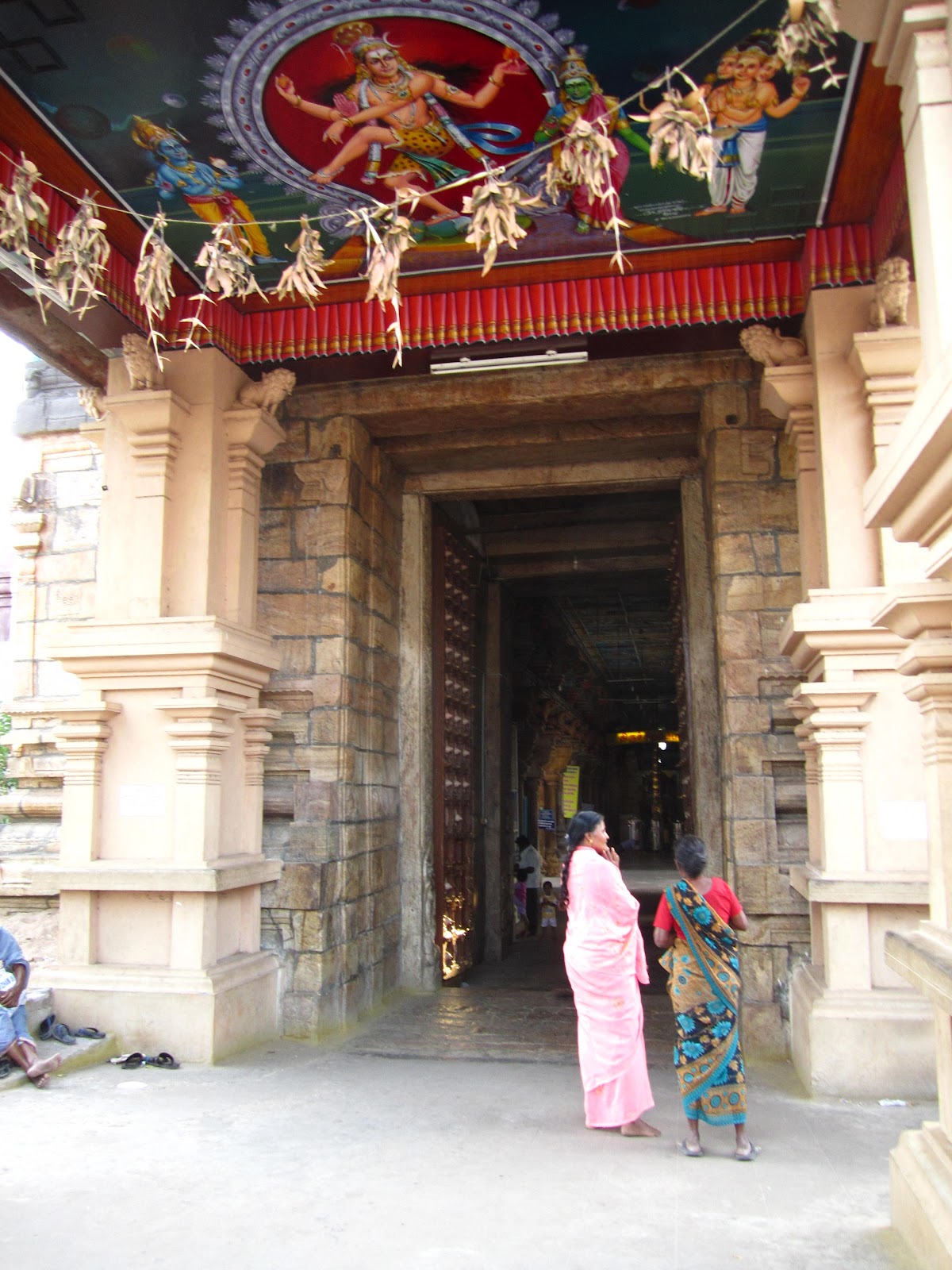
Outside Perur Temple which is dedicated to Shiva, depicted on the ceiling.
 Many students were excited to see their first elephant in India at Perur! Elephants are often kept in Hindu temples to bless people as they come through by placing its trunk on their head.

Aleena, Johanna and Morgan enjoying some refreshing coconuts!
Keep an eye out for our upcoming posts as we take our first weekend trip to Madurai where we will explore the ancient Meenakshi Temple!

__________________________________
Photos taken by Karmen Tam

Monday, September 17, 2012

In Pictures: Amazing Race: Coimbatore!

Orientation would not be complete without a little adventure! So towards the end of their first few days here we sent our students out on the Amazing Race: Coimbatore.

ISPers with the tailor at Feelings.
What is the Amazing Race? Students are given a list of important locations in the area and turned loose for an afternoon of exploration. This is the first chance that they have to be out on their own and part of the aim is to encourage ISP-ers to gain confidence in getting around their city. At the end of their afternoon they are met by a staff member for a celebration dinner where they share their stories!

Aleena tries to push up the leaning tower on Race Course.
Their tasks ranged from finding the grocery store and discovering new produce (ask them what butter fruit and brinjal are!) to spotting the replicas of famous landmarks from around the world that dot Race Course. 

Tanner and Ashley at the neighborhood Ganesha Temple. 

On the way they also searched for Connexions (a nearby bookstore), peeked into some neighborhood temples and braved buses and autorickshaws. 

Morgan discovers Bollywood movies!
Despite their jet-lagged state, all of the teams had an exciting afternoon that they're not likely to forget soon!

Aleena explores Pazhamudir, a local grocery store.
_____________________
Photos by Aleena Plummer, Kelly Uchiumi, Hannah Burgess and their teammates.

Thursday, September 13, 2012

Orientation

Our students have arrived! They have hit the ground running as they learn about India and get acquainted with our sprawling city of Coimbatore.

ISP trying new foods on their first night in Coimbatore.

Right off the plane they were welcomed by staff and peer mentors and they began taking in the sites on the bus ride through the city. The students wrapped up their first night here by sharing a giant family dosa, an ISP tradition!

Rangoli, a traditional decorative art, done by BACAS students to welcome ISP.
Photo Credit: Kelly Uchiumi
  Everyone was kept busy as “batch 3” conquered their fears of the public bus, tried on salwaars for school and kicked off their first few days of classes. We capped off orientation with the Amazing Race: Coimbatore, where students head out and hunt for different landmarks around the city.
 
The students after being thoroughly welcomed and garlanded by BACAS.

For now, everyone is settling in and learning more about doing life together in India. Stay tuned for our next post!

Tuesday, September 11, 2012

Meet the staff!

Vannakam! My name is Karmen and I am excited to be the new program assistant at ISP. I first came to India as a student, and have kept returning since then. My experiences here have been formative in my understanding of the world, introducing me to ideas of international development, globalization and how our faith integrates with them. These have gone on to influence what I pursue – from resettling refugees in the US and studying in the Middle East to working for a non-profit furthering education in Central and Southeast Asia. I’m looking forward to being with our ISP-ers as they walk through challenges and new experiences on their journey in India!


Karmen Tam, ISP Program Assistant, exploring Turkey